Every time you hop into your car, you breathe in the remnant smells, spot the old coffee stain on the seat, or notice the dust on the dash. It’s like your car’s interior has been hosting a tiny science experiment in grime and germs!
That’s where interior car detailing comes in. Think of it as a deep spa day for your vehicle: pro detailers use tools like steam cleaners and enzyme treatments to scrub away smells, lift stains, and sanitise surfaces that ordinary vacuuming can’t touch. In fact, professional detailing “goes far beyond basic vacuuming,” restoring your cabin to a fresh, like-new condition.
Living in Toowoomba, you know how our dry climate and countryside drives can kick up dust and pollen inside cars. Regular cleaning helps, but professional detailing is the secret weapon to beat trapped odours and hidden bacteria.
Why Interior Car Detailing Matters
Interior detailing isn’t just about making your car look pretty – it’s about health and value too. Over time, our vehicles accumulate spills, pet hair, smoke, and microbes. A professional detail targets all these. For example, a detailing service will remove stubborn odours from coffee or puppy accidents, eliminate bacteria and allergens, and restore seats and carpets.
This not only leaves your car smelling clean, but it improves the air quality inside and even preserves your resale value. Without it, dirt and moisture can get locked into fabrics and vents, where they fester out of sight.
Key benefits of interior car detailing include:
- Odour Elimination: Kicks out lingering smells from spills, pets, smoke and moisture.
- Germ and Allergen Removal: Uses steam and specialised cleaners to kill bacteria and allergens trapped in fabrics.
- Surface Renewal: Restores upholstery, leather, plastics and carpets so the cabin looks fresh.
- Air Quality Boost: Cleans vents and filters to improve the air you breathe inside the car.
Professional detailers have the gear and know-how to clean far deeper than a home vacuum. As one detailing expert notes, specialist equipment can tackle deep-seated odours and grime so your car ends up “fresh, sanitized, and comfortable”.
Banish Bad Odours with Deep Cleaning
Ever wonder why your car smells like last week’s snack? Food or drink spills, pet accidents and smoke don’t just sit on the surface – they soak into upholstery and carpets. Simple air fresheners only mask the problem. Pro detailers tackle odours at the source. They often start by vacuuming out crumbs and debris, then use steam cleaning on seats and mats.
Steam is super-heated water vapour that breaks down odor-causing bacteria naturally. Next, enzymes or special deodorisers neutralise organic smells (think coffee or milk spills) right where they cling. Technicians also clean air vents and replace the cabin filter to stop smells from cycling back in.
Sometimes the toughest odours call for an extra trick: ozone treatment. This isn’t magic air freshener spray – ozone is a gas that destroys bacteria and odours. In fact, Australian detailers use ozone machines to kill E. coli, salmonella, staphylococcus and even respiratory viruses lurking in cars. The ozone fills the cabin and oxidises the “living” source of the smell, completely neutralising it. Unlike a temporary spray, these methods leave your car truly smelling fresh for weeks.
- Steam cleaning penetrates deep to kill bacteria.
- Enzyme sprays break down organic spills at the molecular level.
- Ozone generators (like a mini air purifier) oxidise and destroy remaining bacteria and mould.
Professional detailers know odours won’t return easily because they’ve wiped out the source, not just covered it up. You can actually enjoy that “new car” smell again without any nasty surprises.
Tackling Stains Safely
From fast food ketchup to muddy footprints, stains are a given in daily driving. But the last thing you want is a permanent blotch or a bleached leather seat. Detailers use careful techniques for each stain type. First, they identify the material fabric, leather, vinyl or plastic.
For cloth seats and carpets, experts apply fabric-safe pre-treatment detergents to lift stains without setting them. Then a hot water extraction (“steam cleaning for carpets”) flushes out dirt and residue deep in the fibres.
Leather requires extra love: detailers use leather-specific cleaners and conditioners so the dye won’t crack or fade. Gentle nylon brushes reach into textured surfaces, while soft brushes or extraction wands handle delicate fabrics.
Grease and oil marks are treated with degreasing solutions; ink or dye spots get targeted chemicals. The key is not to scrub too hard. As one interior care guide explains, professional detailers “ensure stains are removed without damaging the interior surfaces”.
In practice, a stain removal session might look like this: spot-clean sticky drink spills immediately with a gentle cleaner; use hot-vapor extraction on ground-in dirt; follow up with trim dressing or leather protectant to shield against UV and future grime. The result is a cabin that looks pristine again, with no harsh bleach marks or chemical residues.
Germ-Free Driving: Sanitizing Your Car
Your car’s inside is one of the most-touched places in your life: you grip the steering wheel, fiddle with controls, grab door handles. It’s also one of the most-overlooked when it comes to hygiene. Studies have found eye-opening levels of germs lurking.
For example, one UK research team discovered in nearly every car boot sampled, and other bacteria like Staph aureus on seats and surfaces. That study highlighted that older cars tend to be dirtier.
Another analysis reported that the average car boot contains around 1,425 types of bacteria, with 649 types on the driver’s seat. For perspective, a toilet seat has far fewer. Why so many bugs? Because cars are warm, often humid, and full of crumbs hiding in crevices
. You might touch petrol pumps and public surfaces and hop back in, unknowingly carrying germs on your hands. In short, your car can be a germ paradise unless cleaned thoroughly.
Detailing fights back by systematically sanitizing the interior. After vacuuming, professionals will clean high-touch areas: steering wheel, gearstick, seatbelts, door handles, cup holders, dash buttons – these hotspots are swabbed with safe disinfectant.
Steam cleaning kills germs on fabric naturally by heat. For extra protection, some detailers even use UV light wands or antimicrobial coatings on trim. Vents and air ducts get flushed out so mold spores can’t recirculate. The combined process “helps reduce allergens and creates a healthier space” for you and passengers.
In other words, a full interior detail isn’t just cosmetic – it’s literally like a car spa for your immune system. You’ll drive with cleaner air and fewer sneezes, as bacteria counts plunge. For families or commuters, that peace of mind is priceless.
The Detailing Process: Step-by-Step
Wondering what actually happens during an interior detail? While each detailer has their own order, here’s a typical sequence to banish odours, stains and germs:
- Initial Cleanup: Remove all trash, mats and loose items. Shake out mats and floor liners.
- Vacuum Thoroughly: Go over carpets, seats, headliner and trunk with a strong vacuum (including cracks and vents).
- Shampoo and Extraction: Apply cleaning agents to fabric and carpet. Use a hot-water extractor or steam cleaner to deep-clean and rinse out dirt (this also removes lingering odors).
- Leather and Trim Care: Clean leather or vinyl surfaces with the right cleaner. Condition leather to prevent cracking. Wipe hard surfaces (dashboard, door panels, console) with gentle interior cleaner.
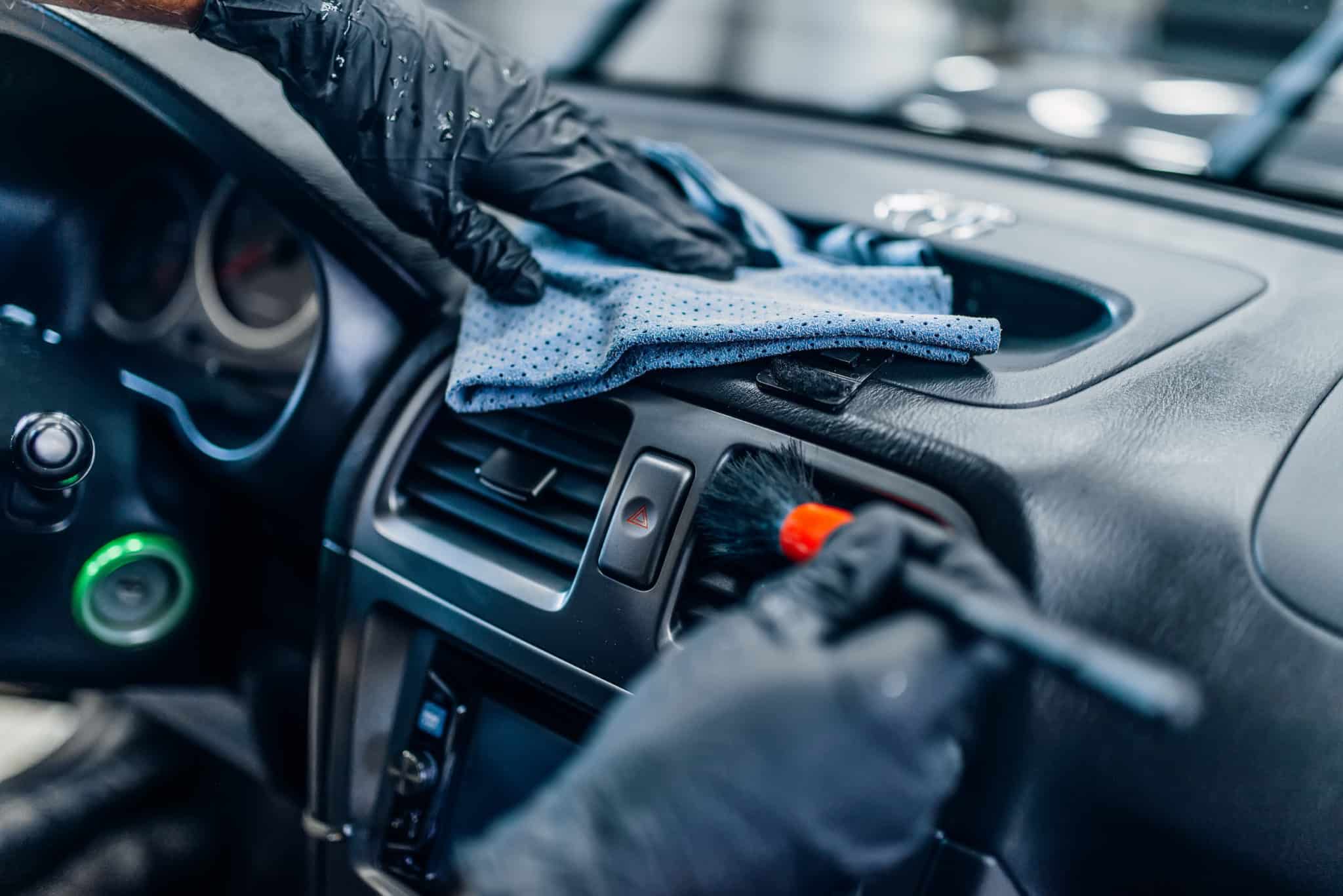
- Detailing Crevices: Brush and vacuum under seats, cup holders, seams and buttons. Clean vents, dashboard nooks and all plastic or metal parts meticulously.
- Glass and Mirrors: Wipe all windows and mirrors with streak-free cleaner.
- Sanitisation and Deodorising: Apply disinfectant to high-touch surfaces. Use a deodorising treatment – a fogger or spray that leaves a fresh, clean scent without harsh chemicals.
Each of these steps is important. As one expert notes, detailers use full interior vacuuming, upholstery shampooing, leather conditioning and more in combination. The synergy of these steps is what restores cleanliness and comfort after years of wear.
Interior Maintenance Tips: Even after a pro detail, good habits keep your car cleaner longer. For example, wipe spills quickly and give your car a weekly once-over. A handy table summarises simple tasks and how often to do them:
| Task | Frequency | Benefit |
| Vacuum carpets & seats | Weekly | Prevents dirt buildup |
| Wipe high-touch surfaces | Weekly | Reduces germs |
| Clean spills immediately | As needed | Stops stains from setting |
| Use floor mats | Daily | Protects carpets from wear |
| Replace cabin air filter | Every 6–12 mo. | Improves cabin air quality |
Following these quick routines can prevent most odors and stains until your next full detailing.
Professional vs DIY
Sure, you can give your car a casual wipe-down at home. But professional interior detailing has perks a DIY job can’t match. Detailers bring industrial-strength vacuums, steamers and extraction machines that completely flush out dirt.
They also use safe, specialised cleaning chemicals you won’t find at the supermarket. As Keen Eyes Auto Detailing puts it, certified detailers use “advanced tools, safe products, and proven techniques” that DIY simply can’t match. They know which cleaners won’t bleach dyes or corrode trims. In short, hiring a pro is about investing in expertise and results.
For example, a local Toowoomba specialist (Star Car Wash) emphasises that interior valeting “restores your car to its showroom look” by removing stains and blemishes. They contrast that with a basic wash that only cleans the outside. So if you’ve ever struggled to get rid of a pet odour or coffee stain at home, consider how thorough a detail can be.
Ultimately, interior detailing delivers a deeper clean. You’ll drive away feeling like you’re in a new car – one that looks, smells, and feels so much better, literally.
Conclusion
Keeping your car’s interior clean is about more than looks. It’s about comfort, health, and long-term care. Interior car detailing is a deep-clean service that removes stubborn stains, eliminates odours, and kills hidden germs, making every drive feel as fresh as the day you bought your car.
With a combination of vacuuming, shampooing, steam cleaning, and sanitising, professional detailers reach the grime that everyday cleaning simply can’t. For Toowoomba drivers dealing with dust and heat, regular detailing helps keep the cabin clean, fresh, and comfortable on every trip.
If your car has funky smells or dingy carpets, don’t ignore it—there’s a solution. Contact us today to book an interior car detailing service and give your vehicle (and yourself) the gift of a cleaner, healthier, and better-feeling drive.
Frequently Asked Questions
How often should I get interior car detailing?
It depends on your use. Many experts recommend a full interior detail at least once a year, especially if you have kids or pets. Between professional details, keep up with vacuuming weekly and attending to spills immediately. In dusty Toowoomba conditions, quick monthly cleanups can help too. Regular minor care prevents big messes later.
Will detailing really remove all stubborn odours?
Yes – if done right. Professionals don’t just mask smells; they eliminate them at the source. As one source puts it, detailing “eliminates odors permanently”, unlike air fresheners that merely cover them up. The use of steam, enzyme cleaners and ozone means even deep-set pet or smoke smells can be neutralised.
Can interior detailing kill bacteria and mould?
Absolutely. Detailers use high-temperature steam and disinfectants that kill 99% of germs in the car, from steering wheels to roof liners. Ozone treatment is especially effective against mould spores and bacteria lurking under carpets or in A/C systems. The thorough cleaning of vents and filters also prevents mold growth.
Is interior detailing worth the cost?
For most drivers, yes. A clean interior protects health and maintains comfort. It also keeps your car’s upholstery and surfaces from deteriorating. Clean, well-cared-for interiors often fetch a higher resale price. Think of it as maintenance: a little investment now avoids bigger problems (and repair bills) later.
What’s the difference between a car wash and interior detailing?
A car wash usually focuses on the exterior body. Interior detailing, on the other hand, is an intensive cabin refresh. It treats upholstery, carpets, and all inside surfaces. For example, a Toowoomba detailer explains that interior valeting goes beyond surface clean – it removes stains and odors to bring back that “new car” feel. In short: one cleans the outside shine, the other restores the inside comfort.


One Comment