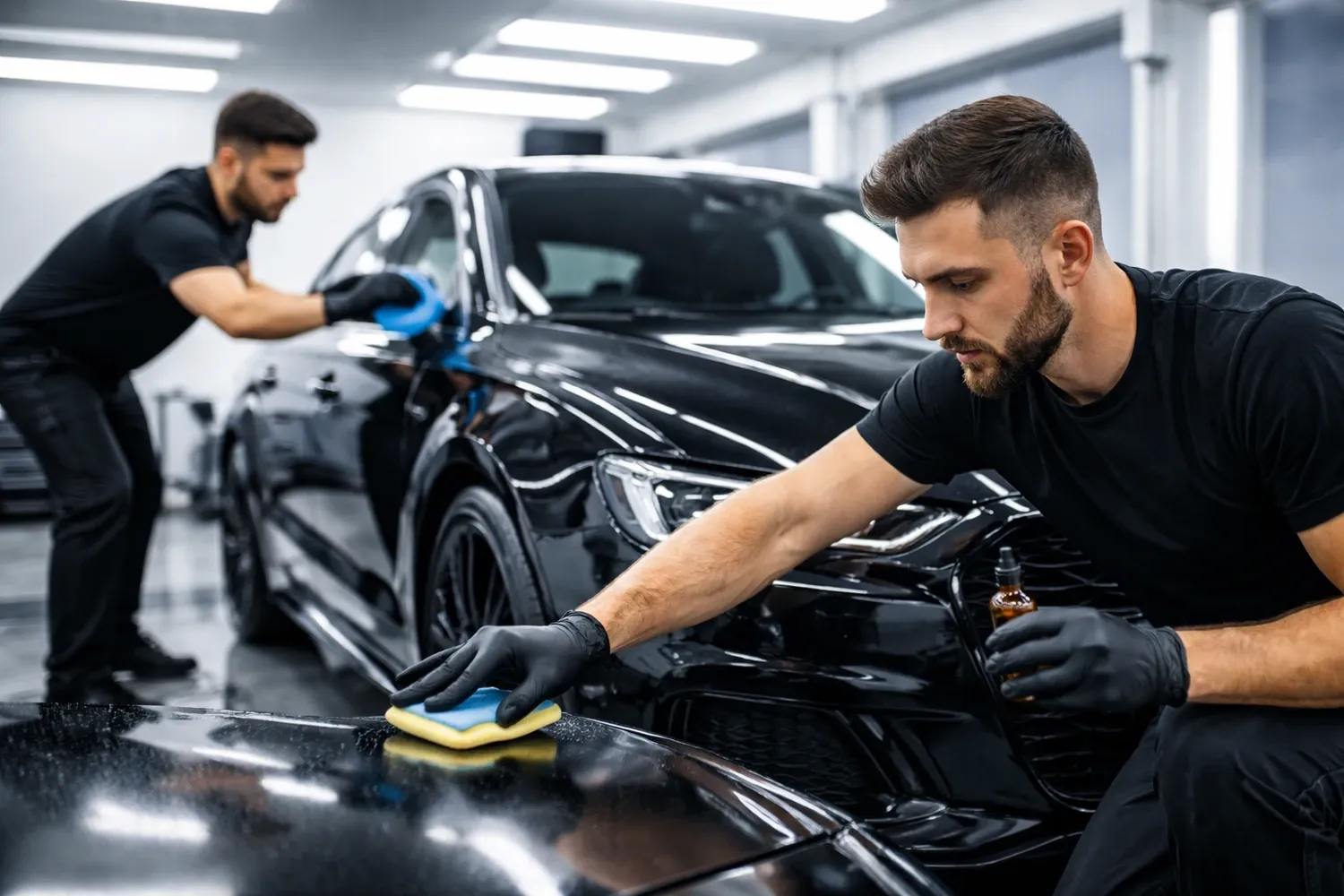
Paint Correction is a professional machine-polishing process that removes or reduces visible imperfections in your vehicle’s clear coat. It can improve swirl marks, light scratches, oxidation, water spotting and dull paint, restoring a smoother and clearer finish without repainting the vehicle.
For Toowoomba drivers, these paint defects can build up through everyday washing, road grime, dust, bird droppings and general exposure. Knowing what correction can and cannot achieve helps you decide whether your car needs a proper polish or simply a thorough wash and protection.
What Does Paint Correction Actually Do?
Modern automotive paint usually consists of several layers, including primer, colour and a protective clear coat. Many marks that make paint look tired sit within the upper part of that clear coat rather than penetrating through the entire paint system.
Professional correction uses carefully selected cutting compounds, polishing liquids, pads and machine polishers to remove a very fine amount of damaged clear coat. By levelling the surface around minor defects, light reflects more evenly and the paint appears deeper, glossier and clearer.
This process can improve:
- Fine swirl marks caused by washing and drying
- Light scratches that have not penetrated deeply
- Hazy or cloudy paint
- Minor oxidation
- Water spots and mineral deposits
- Micro-marring from previous polishing
- Light staining and surface imperfections
It is different from simply covering marks with wax or glaze. Proper correction physically improves the paint surface rather than temporarily hiding defects.
How Do You Know If Your Car Needs Paint Correction?
The easiest way to assess your paint is to look at it under strong, direct lighting. Sunlight, workshop inspection lights or a bright LED can expose marks that are difficult to see in shade.
You may notice circular swirl patterns around reflections, fine scratches along doors and guards, or paint that looks dull even immediately after washing.
Dark-coloured vehicles often make these imperfections particularly noticeable because reflected light shows defects more clearly.
A simple test is to wash and dry the vehicle properly and inspect several panels. If the paint is clean but still appears scratched, hazy or lacks clarity, polishing may be worth considering.
Common Causes of Paint Damage in Toowoomba
Everyday vehicle care can cause more paint defects than many owners realise. Automatic car washes with brushes, dirty wash mitts and wiping dusty paint with a dry cloth can all create fine scratches.
Toowoomba vehicles may also regularly collect road dust, dirt, insects, bird droppings and other contaminants. Leaving contamination on the surface or using aggressive cleaning methods can gradually reduce paint clarity.
Some common causes include:
- Poor washing techniques: Using one bucket, dirty sponges or harsh brushes can drag grit across the clear coat.
- Automatic brush washes: Repeated contact with contaminated brushes can contribute to visible swirling.
- Incorrect drying: Rough towels or wiping a partially dirty vehicle may leave fine scratches.
- Environmental contamination: Bird droppings, tree sap and mineral deposits can mark paint when left untreated.
- Previous polishing: Aggressive or poorly performed machine polishing can leave holograms, haze or uneven results.
Queensland Government guidance also recommends minimising detergent and water use when washing vehicles and preventing wash water from flowing into stormwater drains. Washing on a suitable grassed area can reduce polluted runoff entering waterways.
What Paint Correction Cannot Fix
Correction has limits. It is designed primarily for defects within the clear coat, not damage that has penetrated completely through the paint system.
A deep scratch that exposes primer or bare metal will generally need touch-up work or professional refinishing rather than polishing. Stone chips, peeling clear coat and significant paint failure also cannot simply be polished away.
You can perform a basic check by gently running a clean fingernail across a scratch. If your nail catches noticeably, the damage may be too deep for complete removal.
An experienced detailer may still improve the appearance, but trying to completely remove a deep defect can require taking away too much clear coat. Preserving the paint is more important than chasing a perfect result.
How the Correction Process Works
A professional job normally begins well before the polishing machine touches the paint.
The vehicle is thoroughly washed and decontaminated to remove loose dirt, road film and bonded contaminants. Iron fallout or other embedded material may also need treatment so the polishing pad works against clean paint.
The paint is then inspected under suitable lighting. Depending on the condition, a detailer may perform a test section to determine the least aggressive compound, pad and polishing combination required.
A typical process involves:
- Washing and decontaminating the exterior
- Inspecting the clear coat and existing defects
- Selecting suitable polishing compounds and pads
- Machine polishing affected panels
- Refining the finish where required
- Cleaning away polishing residue
- Applying suitable paint protection
More severe defects may require multiple polishing stages, while relatively well-maintained paint may only need a lighter finishing polish.
Is Paint Correction the Same as Polishing?
Not always.
Basic polishing can improve gloss and remove very minor imperfections. Paint Correction usually refers to a more controlled process focused on reducing specific defects and restoring clarity across the vehicle.
The difference is often in the assessment, equipment, polishing stages and level of defect removal.
A quick polish may make a vehicle look shinier, but it may not properly address deeper swirl marks, haze or previous machine-polishing defects.
Should You Correct Paint Before Ceramic Coating?
If a vehicle has visible imperfections, correction is usually completed before ceramic coating is applied.
A coating protects the surface underneath it. It does not remove swirl marks or scratches. Applying a long-lasting coating over noticeable defects can effectively preserve their appearance until the coating is removed or polished later.
That does not mean every vehicle needs aggressive correction first. A newer or well-maintained car may only require light polishing before protection.
At Wicksy’s Wash and Wax Pty Ltd, the condition of the paint can be assessed first so the polishing process matches what the vehicle genuinely requires.
How Can You Reduce Future Swirl Marks?
Good maintenance can help preserve the finish after correction.
Use a quality automotive wash mitt, clean microfibre drying towels and plenty of lubrication during washing. Avoid household detergents, abrasive sponges and wiping dry dust from the paint.
Queensland environmental guidance recommends using biodegradable, phosphate-free products and keeping potentially contaminated wastewater away from stormwater drains.
Keeping your wash equipment clean and removing bird droppings or other contaminants promptly can also reduce the risk of staining and unnecessary polishing later.
Frequently Asked Questions
Does paint correction remove scratches?
It can remove or significantly reduce light scratches located within the clear coat. Deep scratches that penetrate through the clear coat, colour layer or primer generally require a different repair method.
Will paint correction remove swirl marks?
Yes, many common swirl marks can be reduced or removed through controlled machine polishing. The achievable result depends on the depth of the marks and the condition of the clear coat.
Does a new car need paint correction?
Not always. New vehicles can occasionally have light transport marks, dealership washing scratches or polishing haze, but correction should only be performed if the paint condition warrants it.
How long do the results last?
The corrected paint remains improved because the defects have been physically reduced rather than temporarily covered. New swirl marks can still develop if poor washing or drying methods are used, so ongoing maintenance matters.
When to Call a Professional
Consider professional help when your vehicle remains dull or visibly scratched after a thorough wash, or when you are unsure how deep the defects are.
Machine polishing removes a small amount of clear coat, so excessive or incorrect polishing can cause permanent damage. A professional detailer can assess the paint, choose an appropriate polishing combination and focus on improving defects without unnecessarily removing clear coat.
If your vehicle has swirl marks, haze, light scratches or tired-looking paint, Wicksy’s Wash and Wax Pty Ltd can assess the finish and recommend a suitable correction approach for your vehicle in Toowoomba.
Conclusion
Paint Correction can restore clarity, gloss and depth when your vehicle’s clear coat has developed swirl marks, light scratches or other surface defects. It works by carefully refining the damaged upper layer rather than simply hiding imperfections with wax or filler.
cNot every mark needs aggressive polishing, and deep scratches, chips or failing paint may require another repair method. If you want to know what can realistically be improved, contact Wicksy’s Wash and Wax Pty Ltd for an assessment of your vehicle’s paint in Toowoomba.

