Anyone who drives in Toowoomba knows how the heat of the sun and the red dust affect the exterior of their vehicle. The constant exposure to UV light causes the clear coat to break down, causing the vehicle’s exterior to have a chalky look that is called oxidation.
Not only does oxidation affect the way the vehicle looks, but it also leaves the paint open to further damage, such as rust. Therefore, getting Oxidized Paint Repair done in a timely manner is vital to keeping your vehicle in good condition.
Paint oxidation is caused by the loss of natural oils in the paint through oxygen and sunlight, which then makes the paint look dull and powdery. Washing or applying wax will not correct the problem of oxidation because an oxidized paint repair technique must be used to repair the issue.
The oxidized paint repair is professionally polished to remove the oxidized layers to restore shine and lustre to the paint. It is important to repair the paint properly to remove any oxidation, as opposed to simply putting a coat of paint over the problem, as this will only lead to other issues down the line.
Why Toowoomba’s Environment Accelerates Oxidation
Oxidized paint repair in Toowoomba is much more important due to the harsh climate there. Since Toowoomba is situated at an altitude of about 700 metres above sea level, the Darling Downs is under a strong influence of ultraviolet rays that cause paint deterioration to happen a lot faster than in the coastal regions.
Moreover, one should pay attention to the red dust, which abounds in the area. It consists of iron oxide and, therefore, can be destructive and act as sandpaper if it is not removed properly. Red dust may become glued to the clear coat and thus create an etching effect.
So, due to all these factors such as intensive sunlight, abrasive dust and contaminations which are highly acidic, your car’s paint gets damaged constantly. Moreover, driving on roads such as the Warrego Highway exposes cars to various elements, like bug splatter, that deteriorate paint.
How Oxidized Paint Repair Works
So how do experts turn that chalky paint back to showroom shine? The key is paint correction and polishing. First, the vehicle is thoroughly cleaned – washed, decontaminated, and clay-bared – to remove all surface grime and iron particles.
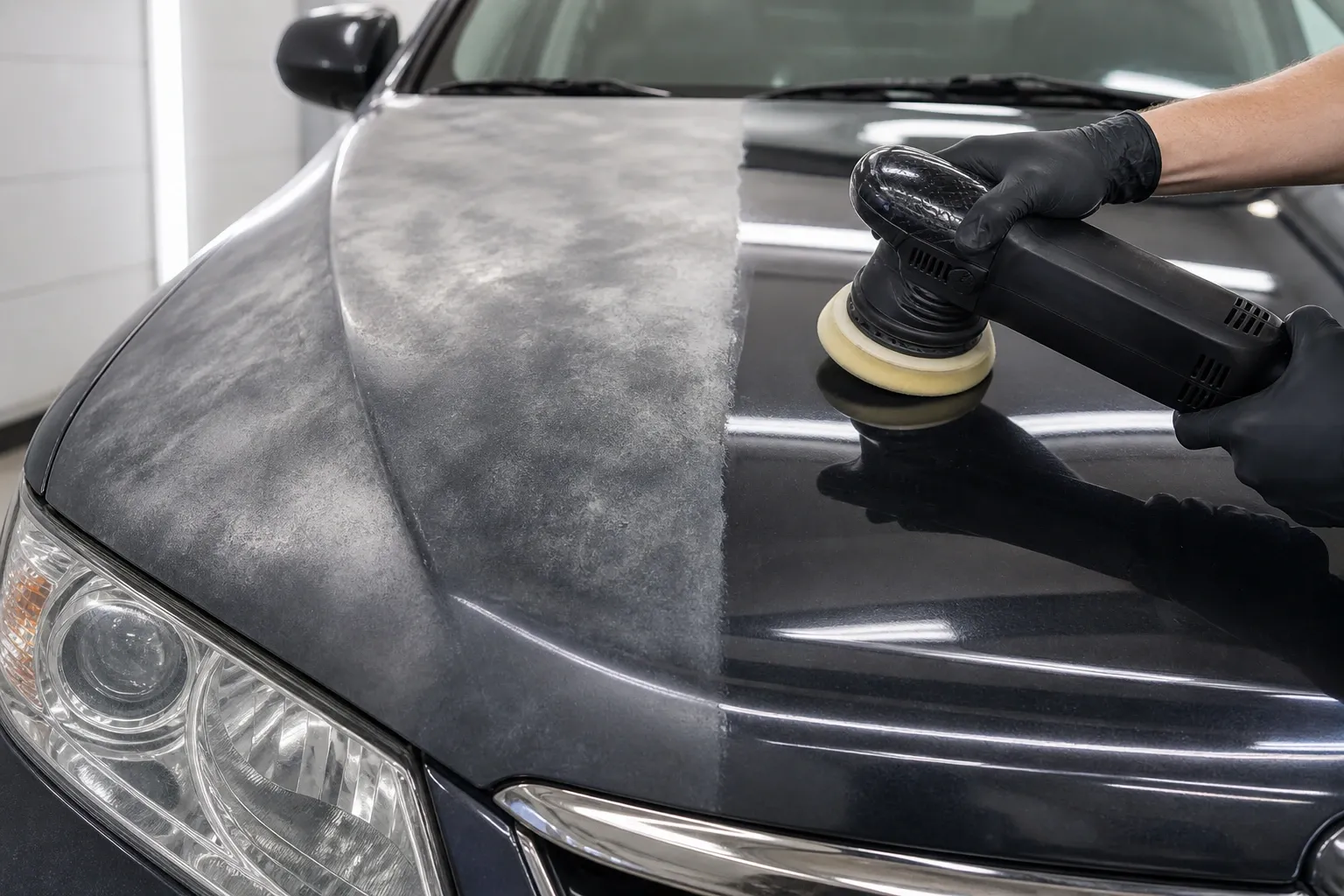
Then comes the correction: a professional detailer uses a buffing machine with polishing compounds to remove the oxidized layer of paint. Think of it like sanding a wooden table to remove the weathered topcoat – except it’s done by machine with fine-grade polish instead of sandpaper.
- Step 1: Clean & Clay: Remove all dust, dirt, brake dust and iron fallout so polishing won’t grind grit into the paint.
- Step 2: Polish (Machine Buffing): Using the least-aggressive polish needed, a buffer cuts through the oxidized surface. As one expert forum notes, if the oxidation isn’t too extreme, simply abrading and polishing “will expose a fresh base which you can then polish to a high gloss”.
- Step 3: Inspect & Repeat: Heavier oxidation or scratches may need multiple polishing stages to restore depth safely. Detailers often do two or more passes with finer polishes until the haze is gone.
- Step 4: Protect: Immediately after polishing, a sealant (wax, paint sealant or ceramic coating) is applied. This protects the freshly-restored clearcoat and keeps the shine longer. Quality coatings act like a sacrificial layer, taking scratches and acids so your paint doesn’t.
If you need expert advice on how to protect your car from environmental damage based on solid scientific knowledge, then you should definitely visit some reliable sources. One of those is the Australian Government Department of DCCEEW [Climate Change, Energy, the Environment and Water].
The information they provide on UV rays, air composition, and other environmental issues will help you understand how factors such as bright sunlight and air components cause premature deterioration of car exteriors. Using credible information alongside professional oxidized paint repair ensures you’re making informed decisions to preserve your car’s exterior for the long term.
Benefits of Repair: Shine, Protection and Value
| Benefit | Description | Impact on Your Car |
| Enhanced Shine | Restores the deep gloss and original colour by removing the dull, oxidized layer | Your car looks newer, cleaner, and more visually appealing |
| Surface Protection | Rebuilds the clear coat layer, helping repel water, UV rays, and contaminants | Prevents further fading, oxidation, and moisture damage |
| Long-Term Durability | Helps preserve paint oils and structure through professional correction | Reduces the need for frequent repairs and maintenance |
| Higher Resale Value | A well-maintained finish increases buyer confidence and perceived value | Can add hundreds of dollars to resale or trade-in price |
| Resistance to Elements | Protects against Toowoomba’s harsh UV, red dust, and acidic droppings | Minimizes environmental damage over time |
| Cost Savings | Prevents expensive repainting or rust repairs in the future | Saves money in the long run |
| Peace of Mind | Keeps your vehicle looking “showroom-ready” even in tough conditions | Confidence that your car is protected and well-maintained |
Timeframe and Choosing the Right Service for Oxidized Paint Repair
As for the difficulty associated with oxidized paint restoration, it will depend on how damaged the paint coating is, as well as the size of the automobile. Oxidized Paint Repair that occurs to a smaller degree can be fixed with a one-stage polish, but the more significant damage might require a multi-stage process of paint correction.
Regarding time required for paint restoration, even basic jobs can be done by specialists in one day. By choosing professional oxidized paint repair services, you can make sure that the job will be done quickly and that the safety of your paint coating will be guaranteed.
Choosing the appropriate service providers is crucially important. The experienced detailers have knowledge about conditions in the particular area where the job is going to be done, and they know how to evaluate the current state of paint on the vehicle in order to choose appropriate polishing methods.
Protecting Your Paint After Correction
Use Ceramic Coating or Sealant: Coating with a ceramic type or high-quality sealant once the correction has been done forms a strong protective coating. It serves as a sunscreen for your vehicle, protecting the surface against the harmful UV rays and environmental factors
Enhances Durability: The layers are waterproof and very resistant to dust, dirt, and other pollutants. Included with oxidized paint repair, this provides additional strength to your paint, making it last longer without having to do as much maintenance.
Best in Harsh Climate: Protective coatings can greatly retard fading and oxidation of the paint in high UV environments. They can be used alongside oxidized paint repair to offer long-term protection from the sun and environmental degradation.
Maintains Glossy Finish: The deep mirror-like shine attained after correction is maintained on a well-coated surface. It also minimizes the possibility of dullness reoccurring following oxidized paint repair, and your car appears newer.
Improves Long-Term Protection: The paint is sealed, forming a barrier against moisture, chemicals and daily exposure. This guarantees the advantages of oxidized paint repair to be longer, and to avoid damage and expensive repairs in the future.
Conclusion:
In Toowoomba’s tough climate, oxidized paint repair is more than a luxury detail – it’s preventative maintenance. By restoring your clear coat and adding protection, you save yourself from future headaches (and costs).
Remember: treating UV, dust, and acid splatters as seriously as you treat skin protection pays off. If your car’s paint feels rough or looks dull, don’t wait. Talk to a local expert about paint correction and ceramic coatings. In many cases, a single day of professional work can keep your car looking great for years.
Ready to bring back that showroom shine? Contact your nearest Toowoomba car detailer today for an inspection and quote. A small investment now will protect your biggest road investment later – your car.
FAQs
What causes paint oxidation, and how can I spot it?
Oxidation happens when sunlight, oxygen and pollutants break down the clear coat on your car. In practice, you’ll see it as faded, chalky patches – especially on horizontal surfaces (hood, roof, bonnet). It often starts subtly, so compare your car’s finish to a freshly polished panel.
Can oxidised paint be fully repaired?
Yes – if caught early or if the paint still has enough thickness, a professional buffing can remove that oxidized layer and reveal the original paint. Very heavy oxidation might require multiple polishing stages or even touch-up painting, but usually, you can restore most of the finish. (
How long does a paint correction last?
That depends on your maintenance. With good washing habits and proper protection, the results can last for years. Use gentle, pH-neutral shampoos, and reapply a quality wax or sealant periodically. In Toowoomba’s sun, at a minimum, plan for a yearly check-up, especially if you park outside a lot.
How often should I polish my car to avoid oxidation?
It varies by environment. In Toowoomba, many detailers recommend a light polish plus wax at least once a year, and full correction every few years if needed. Think of it like deep-cleaning your home: even if you wash regularly, a periodic polish brings back that original shine and protective layer.
Is it better to just repaint instead?
Repainting solves the problem permanently, but at a much higher price and effort. It also doesn’t protect the new paint from future oxidation unless you coat it. It’s usually far quicker and cheaper, and for many cars, offers a like-new result that keeps the factory paint’s integrity.

