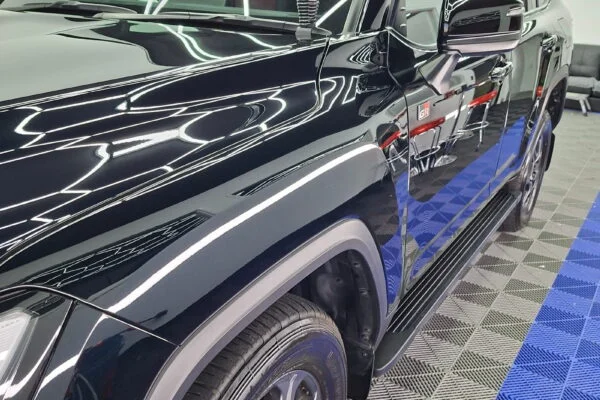
No streaks, no spots, just a clean little marble of water sliding straight off. That’s the moment, got it. Why do people rave about ceramic coating like it’s some kind of cult?
Here’s the thing, though: not all coatings are created equal, and not all installers know what they’re doing. You can buy a bottle of “ceramic spray” from the servo for twenty bucks, or you can hand your car over to someone who’s spent years perfecting the craft. The results aren’t even in the same postcode.
That gap is exactly why hiring a professional car coating specialist makes such a difference. It’s not about the marketing on the bottle – it’s about prep work, product knowledge, and the patience to do the job properly instead of rushing it between other customers. Get it right once, and your paint thanks you for years.
What Does Car Coating Actually Do to Your Paint?
Let’s clear up the confusion first, because I get asked this constantly. A ceramic coating isn’t a thicker version of wax. It’s a liquid polymer that bonds chemically to your clear coat, forming a semi-permanent layer of protection that’s harder, glossier, and far more resistant to the elements than anything in a bucket.
Once it cures, you get:
- Hydrophobic beading that pushes water (and the dirt riding on it) straight off the panel
- UV resistance that slows down paint oxidation and fading
- Chemical resistance against bird droppings, tree sap, and bug splatter
- A deeper, wetter-looking gloss that wax simply can’t replicate
The catch? A coating only performs as well as the surface underneath it. Slap it over swirl marks and old contamination, and you’ve just sealed in the flaws for the next two years. That’s the bit DIYers miss every single time.
DIY Wax, Spray Sealant, or a Professional Ceramic Coating – What’s the Real Difference?
Honestly, I don’t blame anyone for being tempted by a Saturday-arvo DIY job. It’s cheaper upfront, and the internet makes it look easy. But “easy” and “good” aren’t always mates. Here’s how the three options actually stack up:
| Feature | Carnauba Wax | Spray/DIY Sealant | Professional Ceramic Coating |
| Typical lifespan | 4–8 weeks | 3–6 months | 2–5+ years |
| Gloss level | Warm, soft shine | Moderate shine | High-gloss, deep shine |
| Scratch resistance | Minimal | Low | Genuinely improved |
| Application time | 1–2 hours | 1–3 hours | Full day, professional facility |
| Upfront cost | Low | Low–Medium | Higher |
| Cost over 3 years | Adds up fast (reapply often) | Adds up | Often cheaper long-term |
See that bottom row? That’s the part most people overlook. A wax job feels cheap until you’ve bought your tenth bottle and spent your Sundays reapplying it. A proper coating, installed once by a specialist who’s prepped the paint correctly, quietly out-earns its price tag over time.
Skip the Dealership Upsell – Why an Independent Specialist Wins
If you’ve bought a car recently, you’ve probably sat in the finance office while someone tried to sell you an in-house “paint protection package” for a small fortune. I get why dealers push it – it’s a tidy profit margin for them.
But it’s rarely the best deal for you, and it’s worth knowing your rights before you sign anything. The Australian Competition and Consumer Commission outlines the consumer guarantees that already apply when you buy a vehicle, regardless of which add-ons are offered at the counter.
An independent car coating specialist, by contrast, has skin in the game that’s different from a dealership’s finance team. Their reputation lives and dies on results, word of mouth, and repeat customers – not on how many add-ons they can bundle into your loan. They’ll usually:
- Inspect the paint condition before quoting, rather than offering a flat package
- Explain exactly which product they’re using and why
- Show you genuine before-and-after results from real local jobs
- Stand behind the work with an actual warranty, not just a sales pitch
Toowoomba’s Climate Is Tougher on Your Paint Than You’d Think
Here’s something a lot of Garden City locals underestimate: our climate is genuinely hard on a car’s finish. We get scorching summer UV up on the range, sudden hailstorms that roll through without much warning, and plenty of dust blowing in off the surrounding farmland. Add daily parking under our gum trees (sap, anyone?) and you’ve got a paint job working overtime just to survive the year.
A quality coating gives your paint a fighting chance against all of it. UV-stable formulas slow oxidation, the slick surface makes it harder for dust and grit to bond, and clean-up after a sap or bird-dropping incident becomes a five-minute wipe instead of a weekend scrubbing session.
Throw in the temperature swings we get between a frosty winter morning and a 35-degree afternoon, and you’ve got conditions that genuinely stress a clear coat over time. None of this means your car is doomed without a coating – plenty of cars survive on regular washing alone. It just means the margin for error is smaller here than in milder climates, and a bit of extra protection earns its keep faster than you’d expect.
How to Spot a Genuine Car Coating Specialist
Not every business with “ceramic” in the name is worth your cash. A few signs you’re dealing with someone who actually knows their stuff:
- They talk you through paint decontamination and correction before coating, not just the coating itself
- They use a dedicated, controlled environment, not a driveway in the wind
- They’re upfront about realistic lifespan and maintenance, instead of promising “lifetime” miracles
- They show real before-and-after photos, not just stock images
Ask questions. A genuine specialist will happily geek out about their process with you – and honestly, that enthusiasm is usually a good sign you’re in the right hands.
What to Expect on Coating Day
Curious what actually happens once you drop your car off? A proper job isn’t a quick spray-and-go. It generally runs through a few key stages:
- Wash and decontamination – removing embedded grime, tar, and old wax that’d otherwise sit between the paint and the coating
- Paint correction – gently polishing out swirl marks and light scratches so the gloss underneath is as clean as possible
- Panel prep – wiping down with an alcohol-based solution to strip any oily residue before application
- Coating application – applying the product in even, controlled layers, often inside a dust-free booth
- Curing time – anywhere from a few hours to a full day, depending on temperature and product
This is exactly why a same-day “coating” for fifty bucks should raise an eyebrow. Doing it properly takes time, and that time is where the real protection comes from.
Conclusion
A great-looking car isn’t really about luck or expensive products sitting unused in your garage. It’s about getting the prep work right, choosing a coating that matches how you actually use your car, and trusting someone who treats your paint with the same care they’d give their own.
DIY has its place, sure – but if you want results that actually last through a Toowoomba summer (and hold their value when you sell), a professional specialist is the smarter long game.
If your car’s due for some genuine love, don’t wait until the next hailstorm or another summer of relentless sun does the damage for you. Book a consultation with a local car coating specialist this week and see what your paint looks like when it’s properly protected – you might just catch yourself staring at the bonnet as I did.
FAQs:
1. How long does a professional ceramic coating actually last?
Most professionally applied coatings last anywhere from two to five years, depending on the product grade, how well you maintain it, and how often the car sits outside. Cheaper DIY sprays typically only last a few months by comparison.
2. Is ceramic coating worth it for an older car?
Absolutely – a coating can restore gloss and add a fresh layer of protection to ageing paint, as long as any existing swirls or oxidation get corrected first. It won’t undo deep scratches, but it’ll make the paint look and perform noticeably better.
3. Does a ceramic coating mean I never have to wash my car again?
No, and any specialist who tells you that is having you on. You’ll still need regular washes, just far easier and quicker ones, since dirt and grime struggle to stick to the coated surface.
4. How much does professional car coating cost compared to DIY products?
Professional coating costs more upfront, but it typically works out cheaper over a few years once you factor in how often you’d otherwise be buying and reapplying wax or spray sealant. Many owners find the long-term value outweighs the initial price difference.

